


Sensor
What Is Sensor
A sensor is a device that detects and responds to some type of input from the physical environment. The input can be light, heat, motion, moisture, pressure or any number of other environmental phenomena. The output is generally a signal that is converted to a human-readable display at the sensor location or transmitted electronically over a network for reading or further processing. Sensors play a pivotal role in the internet of things (IoT). They make it possible to create an ecosystem for collecting and processing data about a specific environment so it can be monitored, managed and controlled more easily and efficiently.
Advantages of Sensor
Data acquisition
Sensors enable the collection of real-time data from the physical environment, providing valuable insights for analysis and decision-making.
Automation
Sensors facilitate automation by detecting changes in the environment and triggering predefined actions or adjustments without human intervention.
Efficiency
With sensors, processes can be optimized for efficiency, leading to resource savings and improved productivity.
Safety
Sensors enhance safety by monitoring critical parameters such as temperature, pressure, and toxicity levels, and triggering alarms or shutdowns when thresholds are exceeded.
Quality control
Sensors help maintain product quality by monitoring parameters such as temperature, humidity, and pressure during manufacturing processes.
Remote monitorin.
-
 Komatsu Sensor Fuel Level 569-06-83410 Original PartsKomatsu Sensor Fuel Level 569-06-83410 HD465 HD605 Dump Trucks Parts Original Made in Japan in stockAdd to Inquiry
 -
 Komatsu Sensor 56D-15-39910 Original Parts in StockKomatsu Sensor Pressure, Torque Converter 56D-15-39910 for WA500 WA380 WA470 WA480 HD605 HD785 HD325 Original Parts in stockAdd to Inquiry
 -
 Original New195-06-48340 Cap For D155 D275 D375Original new195-06-48340 cap for D155 D275 D375Add to Inquiry
 -
 Genuine Pressure Sensor 7861-93-1620 For Dump Truck HD325...Genuine Pressure Sensor 7861-93-1620 For Dump Truck HD325 HD405 HD465 HS785Add to Inquiry
 -
 Genuine Fuel Tank Sensor 7861-93-4930 For Bulldozer D275 ...Genuine Fuel Tank Sensor 7861-93-4930 for bulldozer D275 D375 D475Add to Inquiry
 -
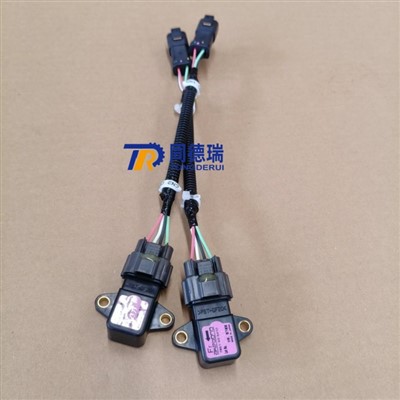 Komatsu Sensor Acceleration7861-93-5410 Genuine PartsKomatsu Sensor Acceleration 7861-93-5410 for D275A D375A D475A HM300/400 HD325/465/605 Heavy Machinery PartsAdd to Inquiry
 -
 HD465 HD605 Valve Brake 569-43-83111 569-43-83121 Origina...Komatsu Valve Assy Brake 569-43-83121 569-43-83111 for HD465 HD605 Dump Trucks Original Parts in StockAdd to Inquiry
 -
 Komatsu Sensor 7861-93-1670 Genuine PartsKomatsu Sensor 7861-93-1670 for D375 D475 HD465 HD605 HM400 PC1250 WA900 GENUINE SPARE PARTS IN STOCKAdd to Inquiry
 -
 Genuine D375A Bulldozer Sensor 7861-93-2220Construction Machinery Genuine Komatsu Bulldozer Parts Sensor 7861-93-2220 for D375A-5,D375A-5EO,D375A-6,D375A-6R,D475A-3, D475A-5,D475A-5A,D475A-5EO,D475ASD-5EOAdd to Inquiry
 -
 Loader WA470-6 Sensor 14Y-22-55510Construction Machinery Genuine Komatsu Bulldozer/Wheel Loader Parts Pressure Sensor 14Y-22-55510, for D65EX, D65PX, D65WX, WA470-6, WA480-6Add to Inquiry
 -
 198-03-72100 198-03-72101 Radiator For Bulldzer D475198-03-72100 198-03-72101 Radiator For Bulldzer D475Add to Inquiry
 -
 Komatsu HD785-7 Sensor 7861-93-1930Construction Machinery Genuine Komatsu Dump Truck Parts Sensor 7861-93-1930, for HD325-7, HD405-7, HD465-7, HD605-7, HD785-7, HM250, HM300, HM350, HM400, WA800, WA900Add to Inquiry
-
 Origina 561-40-61330 Bushing For HD985 HD785
 -
 Genuine Product 20Y-979-6191 Sensor For BP500-7 PC200 PC1...
 -
 2A5-50-111910 Cylinder Eye For Construction Machinery
 -
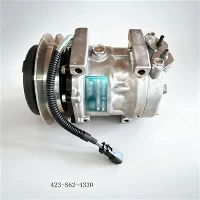 Excavator Air Conditioning Compressor 423‑S62‑4330, Const...
 -
 207-60-71183 Hydraulic Pump Assembly For Excavator
 -
 421‑43‑37300 Hydraulic Control Valve | Construction Equip...
 -
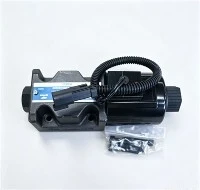 561-43-8A881 Mine Dump Truck Electromagnetic Valve
 -
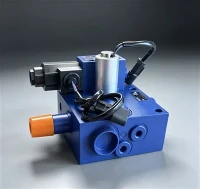 56B 43 12402 Electromagnetic Hydraulic Valve Set Engineer...
 -
 Aftermarket Foot Brake Valve 569-43-83121, Hydraulic Peda...
 -
 New Bushing 6210-21-1790 For S6D140E Parts
 -
 VALVE PARTS 714-10-16951 FOR WA200
 -
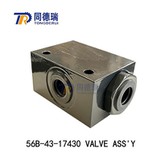 Genuine Product 56B-43-17430 Valve For HD450-7 HD325-7 HD...
- Tel: +8613455586650
- Email: admin@tdrzl.com
- Add: No.8 Shanbo Road, High tech Zone, Jining City, Shandong Province.
Our factory
Our company is located in Jining City, Shandong PR, China, the place for Komatsu and Shantui manufactory. is a leading supplier for Consruction machinery parts. Our company cooperate with the manufactury produce the hydraulic cylinder rod, Could supply for all the model which you need.Our factory owns several mechanical processing production lines, has been approved as OEM parts supplier for Komatsu.
Our product
Our company supply spare parts for excavator, wheel loader, bulldozer and other construction machinery parts. Our parts main used for excavator, wheel loader and bulldozer.
Production market
Our parts main sold South America, Southeast Asia and Saudi Arabia. Exported to more than 50 Contries.
Our service
Could supply you the complete parts with cheaper price. We try and respond to all concerns within 24 hours and our teams are always at your disposal in case of any emergencies.
A sensor operates through a systematic process that involves several key stages. By following this process, sensors convert real-world physical phenomena into electrical signals that can be utilized for monitoring, control, and data analysis in various applications. The sensor contains a sensing element that directly interacts with the physical property being measured. This could involve materials or components that change in response to temperature, light, pressure, etc. Next comes the conversion stage where the transduction happens. The sensing element converts the detected physical change into an initial electrical signal. This initial signal is often small and not yet in a usable form.
These stages of operation are best explained with the help of an example. For example, in a thermocouple, the temperature difference between two junctions of different metals generates a small voltage. This phenomenon occurs because the two metals have different electron densities, causing a voltage to develop when they are subjected to a temperature gradient. he magnitude of this voltage is directly related to the temperature difference between the junction and the other ends of the metals.
After the conversion stage, the initial electrical signal is then processed to enhance its usability. It is called signal conditioning. This stage may involve amplification to increase the signal strength, filtering to remove unwanted noise, and other modifications to linearize the response.
After conditioning, the processed signal is outputted as a readable voltage. This output voltage can be easily read by a temperature monitoring device or a data acquisition system. The final voltage signal is proportional to the temperature difference, allowing accurate temperature readings to be displayed or recorded.
Different Types of Sensors and Sensor Applications
Photoelectric sensors
It is an electronic device that can measure the distance to, as well as the presence or absence of, an object. Photoelectric sensors use an infrared light transmitter and a photoelectric receiver that can receive the reflected infrared light back to do its job. This infrared light can then be measured, interpreted, or relayed to other electronic devices for processing and monitoring.
Proximity sensors
Proximity sensors are devised to be able to detect the presence of a physical object within its vicinity without the requirement of any physical contact. It works by emitting an electromagnetic field of radiation within its range, and the presence of a physical object in the proximity is detected and returned to the sensor.
Inductive and capacitative sensors
Inductive proximity sensors are particularly designed to be able to detect metal objects as big as 60 mm. The inductive proximity sensor is equipped with an oscillator with a sensing face on its windings. The winding generates an alternating magnetic field which can be used to detect metal objects within the magnetic field. The resulting currents that are induced by the metallic object can be picked up by the sensor.
Ultrasonic sensors
An ultrasonic sensor is designed to measure the distance between the sensor and a targeted object with the help of ultrasonic sound wave emissions. An ultrasonic sensor is equipped with a transmitter that uses piezoelectric crystals to produce and emit sound waves and a receiver to intercept any sound wave reflections. The sound reflected back from the targeted object is received and converted to digital or electronic signals that can be later interpreted or processed.
Pressure sensors
Pressure sensors function as detection devices used for measuring the pressure of liquids and gases. The pressure sensor works on the principle of force per unit area and usually serves as a transducer - it generates and records signals when pressure is applied.
Temperature sensor
The temperature sensor, an epitome of scientific innovation, revolutionizes our ability to perceive and comprehend the thermal dynamics of our surroundings. This ingenious device, intricately designed with advanced sensing mechanisms, empowers us to accurately measure and monitor temperature variations with unparalleled precision.
Accelerometer
The accelerometer is a remarkable device that reigns supreme in the realm of motion sensing. It represents the epitome of ingenuity, seamlessly capturing and quantifying accelerative forces experienced by objects in motion.
Ir sensor (infrared sensor)
These sensors find diverse applications in fields such as remote controls, motion detection systems, and temperature sensing. With their ability to detect heat signatures and measure temperature variations, ir sensors enable precise control, monitoring, and automation in various industries. From enhancing security systems to enabling contactless temperature measurements, ir sensors play a vital role in modern technology, revolutionizing the way we interact with and understand our environment.
Light sensor
These sensors find extensive application in fields such as automation, robotics, and photography, where precise light detection is essential. From adjusting screen brightness based on ambient light to triggering automatic lighting systems, light sensors enable efficient energy management and create immersive user experiences.
Smoke, gas, and alcohol sensor
The smoke, gas, and alcohol sensor emerges as a testament to the convergence of cutting-edge technology and safety consciousness. This ingenious device, leveraging state-of-the-art sensing mechanisms, provides an invaluable shield against potential hazards.
Touch sensor
The touch sensor epitomizes the fusion of cutting-edge technology and intuitive interaction. This sophisticated marvel, delicately crafted with precision, enables seamless human-machine engagement through the power of touch. Employing state-of-the-art capacitive sensing techniques, it effortlessly detects and interprets tactile inputs, transforming them into actionable commands.
Determine the type of sensor according to the measurement object and measurement environment. In order to carry out a specific measurement work, first of all, we should consider what kind of sensor should be used, which needs to analyze many factors before we can determine. Because, even when measuring the same physical quantity, there are many kinds of sensors that can be selected.
Selection of sensitivity
Generally, in the linear range of the sensor, the higher the sensitivity of the sensor, the better. Because only when the sensitivity is high, the value of the output signal corresponding to the measured change is larger, which is beneficial to signal processing. However, it should be noted that the sensor has high sensitivity, and the external noise unrelated to the measurement is easy to mix in. It will also be amplified by the amplification system, which will affect the measurement accuracy. Therefore, the sensor itself should have a high signal-to-noise ratio to minimize the interference signal introduced from the outside world. Sensitivity of the sensor is directional. When the measured value is a single vector and the directivity of the sensor is high, the sensor with low sensitivity in other directions should be selected; if the measured value is a multi-dimensional vector, the smaller the cross sensitivity of the sensor is, the better.
Frequency response characteristics
The frequency response characteristic of the sensor determines the measured frequency range. The measurement condition must be kept undistorted in the allowable frequency range. In fact, the response of the sensor always has a certain delay, and the shorter the delay time, the better. The frequency response of the sensor is high, and the frequency range of the measurable signal is wide. Because of the influence of the structural characteristics, the inertia of the mechanical system is large, so the frequency of the measurable signal of the sensor with low frequency is low. In dynamic measurement, the response characteristics of signals (steady state, transient, random, etc.) should be considered to avoid excessive errors.


Linear range
The linear range of the sensor refers to the range in which the output is proportional to the input. In theory, within this range, the sensitivity remains constant. The wider the linear range of the sensor is, the larger the measurement range is and the measurement accuracy can be guaranteed. When choosing sensors, when the types of sensors are determined, the first thing is whether their range meets the requirements.
Stability
The ability of the sensor to keep its performance unchanged after a period of time is called stability. Besides the structure of the sensor itself, the main factor affecting the long-term stability of the sensor is the use environment of the sensor. Therefore, in order to make the sensor have good stability, the sensor must have strong environmental adaptability. Before choosing sensors, we should investigate their use environment, and choose appropriate sensors according to the specific use environment, or take appropriate measures to reduce the impact of the environment.
Accuracy
Accuracy is an important performance index of sensor, and it is an important link related to the measurement accuracy of the whole measurement system. The higher the accuracy of the sensor, the more expensive it is. Therefore, the accuracy of the sensor can only meet the accuracy requirements of the whole measurement system, without having to choose too high. In this way, the cheaper and simpler sensors can be selected among many sensors that meet the same measurement purpose.
5 Tips For Sensor Maintenance
To keep an entire manufacturing system working as it should, every tool and part must be well-maintained. Whether using torque analyzers, load cells, or other measurement tools, it is important to know how to manage and care for these instruments. Perform regular inspections of the system and perform the following tasks on all parts.
Adjust alignment
If one part is not lined up as it should be, it is important to recalibrate and adjust accordingly. You will need proper measuring tools to do this correctly. Calibrating an instrument simply involves comparing one correct instrument to the one your are fixing. You can use that as a benchmark for all of the others.
Keep it clean
Cleanliness is also key to keeping all moving parts performing their jobs correctly. At the end of the day, be sure to remove all debris and oil off the sensor. Also take the time to train all workers and employees in proper cleaning methods.
Practice proper storage
When your tool is not in use, take care to properly store it away. This could mean disassembling it until you need it again, leaving it on a sturdy surface, or covering it with a tarp, depending on the size and location of the tool.
Watch for corrosion
Excessive rusting can cause a machine part to wear down even faster. If you are unable to remove corrosion on your own, consider hiring a professional or replacing the part entirely. Also be sure to keep moisture away from the tool as much as possible, preventing this in the first place.
Know when to replace
Remember that sensor maintenance and cleaning only go so far. If you find yourself having to realign or repair a tool more often that it is worth, it is time to replace it. Check the tool’s warranty before you order a new model. The best way to make a your sensors run well is to involve all of its users in its care. Also remember to hire a professional for a full inspection periodically, as they will point to any significant features that need improvement.
Market Drivers of the Sensor Market
The market drivers in the global sensor market include the growing need of the sensors across various sectors, such as consumer electronics, automotive, industrial IT & telecom, healthcare, aerospace and defence, and more. The sensor market is boosted by the fast progress in technology, the expansion of IoT devices, and the increasing need for smart solutions that work with sensor data for monitoring, control, and automation. The sudden increase in demand is pushing the market growth and is giving a boost to the sensor technology which is transformed to meet the ever-changing needs of the end-users.
Besides, the popularization of the latest technologies such as Micro Electro Mechanical Systems (MEMS), Complementary Metal-Oxide-Semiconductor (CMOS), and Nano Electro Mechanical Systems (NEMS) in the manufacturing of sensors is another important factor that contributes to the fast growth of the market. These innovations boost the sensor performance, reliability, and efficiency, thus, sensors become more versatile and adaptable to a great number of applications. The use of these advanced technologies will help sensor manufacturers create high-quality sensor solutions that will meet the specific needs of the different industries.
Moreover, the growing attention to energy saving, sustainability, and the protection of the environment is the main reason for the use of sensors in green technologies and eco-friendly products. Sensors are an important part of the optimization of energy consumption, cutting waste, and improvement of operational efficiency in different sectors. The focus on sustainability is making companies put in sensor technologies that will help in saving energy, reducing the carbon footprint, and aiming at eco-friendly practices, thus contributing towards market growth.
Jining Tongderui Construction Machinery Co., Ltd was established in 2011. Our company is located in Jining City, Shandong PR, China, the place for Komatsu and Shantui manufactory. is a leading supplier for Consruction machinery parts,after 12 years development, Our company service more andmore clients in the world. Help them to got the spare partswith best price and quality, fast delivery. Our company cooperate with the manufactury produce the hydraulic cylinder rod, Could supply for all the model which you need.Our factory owns several mechanical processing production lines, has been approved as OEM parts supplier for Komatsu. Exported to more than 50 Contries. Passed ISO 9001-14001 international quality management system certification.


Certificate

FAQ
As one of the leading sensor manufacturers and suppliers in China, we warmly welcome you to wholesale discount sensor made in China here from our factory. All our products are with high quality and low price.
208-06-71130, 7861-93-1812, Sensor