


Radiator
What Is Radiator
A radiator is a heat exchanger used to transfer thermal energy from one medium to another for the purpose of cooling and heating. The majority of radiators are constructed to function in cars, buildings, and electronics. A radiator is always a source of heat to its environment, although this may be for either the purpose of heating an environment, or for cooling the fluid or coolant supplied to it, as for automotive engine cooling and HVAC dry cooling towers. Despite the name, most radiators transfer the bulk of their heat via convection instead of thermal radiation
Advantages of Radiator
Efficient radiators can lead to increased engine health
By increasing the efficiency of your radiator you can help to improve the health of the engine, and the longevity of the engine too. This is because an efficient radiator reduces the chances of the engine overheating. When an engine overheats, it can cause serious damage to the engine’s internal components, such as warping cylinder heads, cracking blocks, and seizing pistons. By keeping the temperature at an optimal level, an efficient radiator can help keep the engine performing as it should, reducing risks and prolonging the life of the engine. In addition, in a vehicle with an efficient radiator, the engine will not show signs of wear and tear as quickly this is because the wear and corrosion that forms is often caused by the extremes of temperatures. A good and efficient radiator will prevent the temperatures from reaching the extremes and keep the engine in good condition.
Reducing fuel usage and emissions
In a vehicle, the role of the radiator is to dissipate the heat generated by the engine. When the radiator isn’t working to maximum efficiency, this forces the engine to work even harder to maintain a good temperature and as a result, increases the amount of fuel being used. A higher fuel consumption also increases fuel emissions, so it’s not just bad for your wallet, but also for the environment. By increasing the efficiency of the radiator, the engine can operate at its optimal temperature with less effort, leading to improved fuel economy and reduced emissions. This can also help to improve engine and vehicle performance overall.
Reducing maintenance costs by improving radiator efficiency
A more efficient radiator will help to keep the engine in great condition and this can reduce maintenance costs. Leaks, corrosion or wear and tear won’t be an issue for radiators that are performing well as the heat will be directed away from the engine as needed, and the coolant will be able to flow freely and effectively. This means that the chances of damage will be greatly reduced and you won’t have to pay out for repairs as frequently.
-
 HD785-7 Condenser Ass'y 56E-07-21133Komatsu Genuine Dump Truck/Wheel Loader Parts Condenser Ass'y 56E-07-21133,suitable for GD655-3EO GD675-3EO HD325-7 HD405-7 HD465-7 HD605-7 HD785-7 WA200-7 WA200-8 WA270-7 WA270-8 WA320-6 WA320-7Add to Inquiry
 -

-
 Radiator PC200-8Radiator PC200-8 for komatsu Excavator pc200-8 20Y-03-41651 pc200-8 20Y-03-4365220Y-03-42452. The RADIATOR is divided into new and old models, and the position of the water outlet varies. However,Add to Inquiry
-
 Origina 561-40-61330 Bushing For HD985 HD785
 -
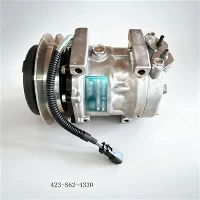 Excavator Air Conditioning Compressor 423‑S62‑4330, Const...
 -
 207-60-71183 Hydraulic Pump Assembly For Excavator
 -
 421‑43‑37300 Hydraulic Control Valve | Construction Equip...
 -
 561-43-8A881 Mine Dump Truck Electromagnetic Valve
 -
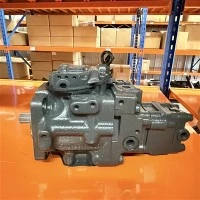 Excavator Main Pump 708-3S-00522
 -
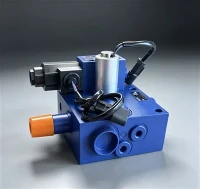 56B 43 12402 Electromagnetic Hydraulic Valve Set Engineer...
 -
 Genuine Product 20Y-979-6191 Sensor For BP500-7 PC200 PC1...
 -
 Aftermarket Foot Brake Valve 569-43-83121, Hydraulic Peda...
 -
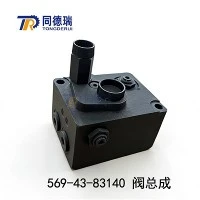 569-43-83140 Battery Charging Valve Solenoid Valve For He...
 -
 2A5-50-111910 Cylinder Eye For Construction Machinery
 -
 New Bushing 6210-21-1790 For S6D140E Parts
- Tel: +8613455586650
- Email: admin@tdrzl.com
- Add: No.8 Shanbo Road, High tech Zone, Jining City, Shandong Province.
Our factory
Our company is located in Jining City, Shandong PR, China, the place for Komatsu and Shantui manufactory. is a leading supplier for Consruction machinery parts. Our company cooperate with the manufactury produce the hydraulic cylinder rod, Could supply for all the model which you need.Our factory owns several mechanical processing production lines, has been approved as OEM parts supplier for Komatsu.
Our product
Our company supply spare parts for excavator, wheel loader, bulldozer and other construction machinery parts. Our parts main used for excavator, wheel loader and bulldozer.
Production market
Our parts main sold South America, Southeast Asia and Saudi Arabia. Exported to more than 50 Contries.
Our service
Could supply you the complete parts with cheaper price. We try and respond to all concerns within 24 hours and our teams are always at your disposal in case of any emergencies.
How to Choose the Right Material for Your Radiator
Cast iron
Their dense heavy structure takes time to reach optimal temperature but remains hot long after the central heating is turned off - perfect for cold, drafty, period homes. If you are looking to achieve a more traditional aesthetic, or statement piece, cast iron radiators are ideal – as many ranges are available in a selection of ral colours and special finishes and offer colour palettes typical of georgian or edwardian properties. There are few cast iron foundries producing radiators in europe and as such they are more expensive than most radiator types, checking they are going to be easy to fit and that the whole system is designed to get the best performance out of them. If you are considering cast iron in your home, then it is important to take into account all the types of radiators in your home and how the heating system has been designed. Cast iron radiators normally require much more water to operate and as a material is slow to heat up and will retain and release heat slowly, so if you have just one or two in your house and the rest are steel or aluminium then you may find the cast iron radiators will not have enough time to heat up properly before the thermostat turns the boiler off as the rest of the radiators are heating up a lot faster. Cast iron radiators work particularly well with high ceilings or older buildings which commonly have less insulation. As cast iron takes a long time to warm up and cool down, the radiators will retain heat well and provide a continual source of heat - therefore keeping the space warm, long after the radiators have been turned off. This material is heavy, so installation needs to be considered, especially as there may be the need to join radiators on site, working with an installer with a good level of experience in cast iron will make the process and final installation a lot easier.
Steel
For a range of traditional and modern designs, sizes and colours steel radiators may be the choice for you. Comprised of a lighter, less dense material than cast iron, steel radiators will heat up and cool down relatively quickly providing manageable control. Steel is the most popular material used to manufacture designer radiators in the uk– in part, because it is easy to shape and therefore create the distinctive and contemporary designs and sizes we are increasingly looking for. If you’re looking for a statement piece, steel radiators are a good place to start. The main purpose of a radiator is to heat your room so how a material transfers heat from the hot water into the room is very important. Steel is a good conductor of heat, but not at the top of the list, it is however a more cost-effective material and has more varied designs to choose from and is therefore a less expensive option.
Aluminium
Aluminium is a highly efficient, conductive material that will heat up very quickly after the central heating is turned on, giving you total control over your central heating system. Aluminium radiators can tick a lot of boxes for homeowners. The main benefit of aluminium designer radiators is that they will heat up faster than other materials as well as cool down quickly. This is because aluminium is a superconductor and so responds quickly to thermostatic changes. Radiators made from this material are therefore highly efficient and make it easy to control the temperature of the space. Aluminium is less flexible to work with than steel so there tend to be fewer variations in designs to choose from. Another benefit of aluminium designer radiators is their light weight. Not only does this make the installation process much easier, but it also makes them suitable for a wide range of projects, as they can be hung on most walls. A further benefit is energy efficiency: Less water is required for aluminium radiators to operate compared to others, meaning less demand on the heating system. These radiators also work well with renewable energy sources and systems running on a lower delta t. Aluminium is also fully recyclable at the end of its useful life (most aluminium radiators are also made from a large percentage of recycled material!) and although it is slightly more expensive in comparison to other materials such as mild steel, the initial cost is more than covered by the lifetime efficiency savings. This makes aluminium radiators appealing to cost-conscious customers, as well as those looking to reduce their environmental impact.
Parts of a Radiator
There are a few main parts that make up the radiator, and each plays a role in the cooling process. They are
Core
The core is the largest part of the radiator. It’s a metal block that features the metal cooling fins that help vent the air. The core is where hot liquid releases heat and gets cooled before being sent through the process again.
Pressure cap
The pressure cap works to help seal the cooling system so it can remain pressurized. Coolant in the radiator is pressurized to prevent the coolant from boiling. It also keeps the system more efficient.
Inlet and outlet tanks
These tanks are where coolant flows in and out of the radiator and are located in the radiator head. Hot liquid flows from the engine through the inlet tank, and once it is cooled, goes out through the outlet tank and back into the engine.
Radiator hoses
Coolant moves to and from the engine via the radiator hoses. They are important for connecting the inlet and outlet tanks to the radiator and the engine.
The radiator is a pretty simple device. Aluminum radiators are used nowadays. It has a tank on both sides, and there is a transmission cooler inside the tank. This radiator has aluminum mesh. Aluminum ports have two port inlets as well as an outlet port. There are tubes mounted in a parallel arrangement inside the radiator. And the aluminum fins are attached to all of the tubes.
The Radiator working is very simple. In the radiator, the coolant flows from the inlet to the outlet through many tubes mounted in a parallel arrangement. The hot water enters the radiator through the inlet port. And a fan is attached behind the radiator to cool down the hot water in the tubes. The fan blows the air and cools down the water. So the water is going to come out cooler than it entered before and then go back to the engine. Now it does that air is going to be feeding through this radiator. The aluminum fins are attached to the tubes this called tabulator.Now the tubes are filled with hot coolant coming from the engine. So they’re going to give off heat to this aluminum coat by passing air through the fan, it cools the aluminum coat.
If the smooth flow through the tubes, only the fluid would be cooled directly that actually touching the tubes. Now it is going to send out to the cooler and then go back to the engine. Its core is usually made up of flattened aluminum tubes with aluminum strips that zigzag between the tubes. These fins transfer the heat in the tubes to the air stream, to be carried away from the vehicle. One is mounted towards the top of the radiator to let the coolant in while the other is mounted at the bottom of the radiator on the other tank to let the coolant back out. On top of it there is an additional opening that is capped off by the radiator cap. In a liquid-cooled internal combustion engine motorcycles and cars, the radiator is connected to channels running through the engine and, through which a liquid (coolant) is pumped in the cylinder head. More commonly a mixture of water and antifreeze is used as the liquid. Antifreeze is ethylene glycol or propylene glycol.

Radiator Usage And Its Diverse Applications
Heating systems
Traditionally, radiators are synonymous with heating systems used in residential, commercial, and industrial buildings. In these applications, radiators work by transferring heat from a central heating source, such as a boiler or furnace, to the surrounding air, effectively warming the space. It offers a range of high-efficiency radiators designed to optimize heat transfer and energy efficiency, providing reliable heating solutions for various environments.
Automotive cooling
In the automotive industry, radiators play a critical role in maintaining engine temperature and preventing overheating. Automotive radiators dissipate heat generated by the engine through a combination of conduction, convection, and radiation, ensuring optimal operating conditions for the vehicle. It specializes in designing and manufacturing automotive radiators that meet the rigorous demands of modern vehicles, offering superior performance, durability, and thermal efficiency.
Industrial applications
Beyond heating and cooling systems, radiators find diverse applications in various industrial processes and equipment. From power generation plants to chemical manufacturing facilities, radiators are used to dissipate excess heat generated during operations, ensuring safe and efficient operation of machinery and equipment. It collaborates with industrial partners to develop custom radiator solutions tailored to specific requirements, delivering reliable performance and optimal thermal management.
Electronics cooling
In the realm of electronics, radiators are employed to dissipate heat generated by electronic components and devices, such as computer processors, power amplifiers, and led lighting systems. Effective thermal management is essential to prevent overheating and ensure the longevity and reliability of electronic systems. It offers advanced radiator designs optimized for electronics cooling, featuring compact form factors, high thermal conductivity materials, and efficient heat dissipation capabilities.
Renewable energy systems
Radiators also play a crucial role in renewable energy systems, such as solar thermal collectors and geothermal heat pumps. In these applications, radiators facilitate the transfer of heat from renewable energy sources, such as sunlight or underground heat, to produce hot water, steam, or space heating. It collaborates with renewable energy providers to develop innovative radiator solutions that maximize energy capture and utilization, contributing to sustainability and environmental conservation efforts.
Types of Radiator
Is There a Specific Time to Replace the Radiator?
As the name suggests, oil-filled radiators are hollow metal panels filled with oil heated by a heating element. They run on electricity and are a practical, low-cost heating solution and a great way to get heating on demand. Oil radiators retain and radiate heat for a long time after they’re switched off, so they use less energy. Like electric radiators, they are controlled independently, allowing more flexibility than plumbed in radiators.
If properly maintained, radiators typically last 8-10 years. In most cases, people only need a replacement radiator if theirs has been damaged or if a more powerful one is needed. However, one should not wait for their vehicle to suffer completely and then go ahead to change their radiators. One must have their radiators checked or replaced if faced with these problems.
Trouble in pressure
It's possible to have either too much or too little pressure in your radiator if your radiator cap fails. In either case, the result is the same and leads to overheating of your engine. Replace your radiator cap in this case. Leaks can cause pressure problems, and pressure problems can cause leaks. The radiator's pressure can be tested at a shop.
Leaks
You should never ignore coolant leaks. Several household pets have died from antifreeze poisoning. If you see a leak, you don't necessarily have to replace your radiator. A leak indicates that something isn't working and that your hoses should be checked, but a leak can occur at any point in the cooling system.
Rust and corrosion
A rusty radiator or debris clogging it is another reason to check your engine. Flushing out your radiator or replacing it will be necessary in this case.
Jining Tongderui Construction Machinery Co., Ltd was established in 2011. Our company is located in Jining City, Shandong PR, China, the place for Komatsu and Shantui manufactory. is a leading supplier for Consruction machinery parts,after 12 years development, Our company service more andmore clients in the world. Help them to got the spare partswith best price and quality, fast delivery. Our company cooperate with the manufactury produce the hydraulic cylinder rod, Could supply for all the model which you need.Our factory owns several mechanical processing production lines, has been approved as OEM parts supplier for Komatsu. Exported to more than 50 Contries. Passed ISO 9001-14001 international quality management system certification.


Certificate

FAQ
As one of the leading radiator manufacturers and suppliers in China, we warmly welcome you to wholesale discount radiator made in China here from our factory. All our products are with high quality and low price.
Radiator, WA450 3 WATER HOSE, Radiator PC200 8