

Hydrauic Motor
A hydrauic motor is a mechanical actuator that converts hydraulic pressure and flow into torque and angular displacement (rotation). The hydrauic motor is the rotary counterpart of the hydraulic cylinder as a linear actuator.
Most broadly, the category of devices called hydrauic motors has sometimes included those that run on hydropower (namely, water engines and water motors) but in today's terminology the name usually refers more specifically to motors that use hydraulic fluid as part of closed hydraulic circuits in modern hydraulic machinery. Conceptually, a hydrauic motor should be interchangeable with a hydraulic pump because it performs the opposite function – similar to the way a DC electric motor is theoretically interchangeable with a DC electrical generator. However, many hydraulic pumps cannot be used as hydrauic motors because they cannot be backdriven.
Advantages of Hydrauic Motor
Precise control
Hydraulic systems provide precise control over motor speed and torque, allowing for smooth and accurate operation of machinery and equipment. This level of control is particularly advantageous in applications requiring fine adjustments and precise positioning.
Robustness and durability
Hydrauic motors are renowned for their robust construction and durability, capable of withstanding harsh operating conditions such as high temperatures, heavy loads, and frequent use. This reliability contributes to minimal downtime and reduced maintenance costs for users.
High power density
Hydrauic motors deliver high power output relative to their size and weight, making them well-suited for applications where space and weight constraints are significant considerations.
Versatility
Hydrauic motors can be easily integrated into a wide range of systems and configurations, offering flexibility in design and application. Whether used in stationary industrial equipment or mobile machinery, hydrauic motors provide adaptable solutions to diverse operational needs.
-
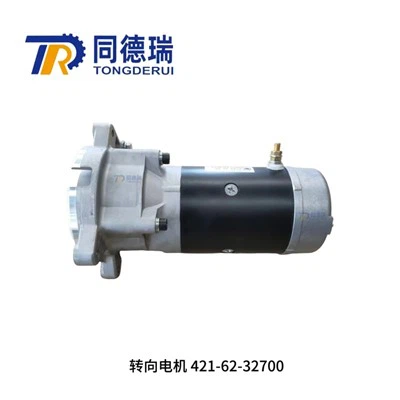 Komatsu Motor 421-62-32700 Original Parts in StockKomatsu Motor Assembly Emergency Steering 421-62-32700 for WA380-6 WA470-6 WA480-6 Loader HD325 HD405 HD465 HD785 Dump Trucks PartsAdd to Inquiry
 -
 708-7s-00530 Fan Motor For WA380-5 WA430-5 WA480-5 Wheel ...708-7s-00530 fan motor for WA380-5 WA430-5 WA480-5 wheel loaderAdd to Inquiry
 -
 CONVERTER AND TRANSMISSION Pump 711-50-51120 711-50-51122CONVERTER AND TRANSMISSION pump 711-50-51120 711-50-51122 for komatsu WA380 WA380Z WA400Add to Inquiry
 -
 PC600-8 Fan Motor 708-7W-00120Construction Machinery Genuine Komatsu Excavator Spare Parts Fan Motor Assembly 708-7W-00120,for PC600-8, PC600-8EO, PC600LC-8, PC600LC-8EO, PC600-8R1, PC650LC-8EO, PC700LC-8EO, PC700LC-8RAdd to Inquiry
 -
 6d125-3 Engine Wiring Harness 6156-81-9320 For PC400-76d125-3 Engine Wiring Harness 6156-81-9320 For PC400-7Add to Inquiry
 -
 Wa380-6 PINION 423-23-31200 423-23-31220 GearWa380-6 PINION 423-23-31200 423-23-31220 Gear fof komatsu parts supplierAdd to Inquiry
 -
 D61 D85 Bulldozer Hydraulic Fan Pump 708-1s-00240D61 D85 Bulldozer hydraulic fan pump 708-1s-00240Add to Inquiry
 -
 WA380-6 WA480-6 Wheel Loader Fan Motor 708-7S-00550WA380-6 WA480-6 Wheel Loader Fan Motor 708-7S-00550Add to Inquiry
 -
 PC300-8MO Final Drive 207-27-00581Construction Machinery Komatsu PC300-8MO Genuine Excavator Parts Final Drive Assembly 207-27-00581Add to Inquiry
 -
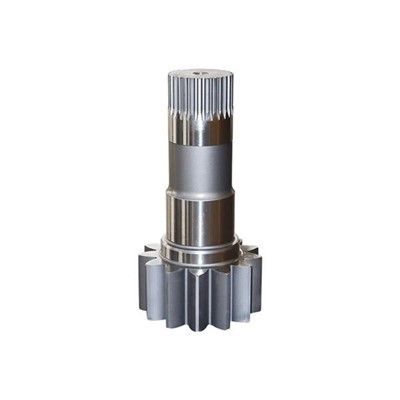 Pc350-8 Swing Motor Shaft 207-26-62180 For Komatsupc350-8 swing motor shaft 207-26-62180 for komatsu original spare partsAdd to Inquiry
 -
 Swing Motor 706-7K-01230 For Komatsu Pc 1250swing motor 706-7K-01230 for komatsu pc 1250-8,Komatsu excavator PC1250-8 all model accessories, we have better prices and the highest qualityAdd to Inquiry
 -
 FINAL DRIVE208-27-000411FINAL DRIVE 208-27-000411 208-27- 00421 This part fits Komatsu PC390LC-10 PC400-7 PC450-8 ExcavatorAdd to Inquiry
-
 Origina 561-40-61330 Bushing For HD985 HD785
 -
 Genuine Product 20Y-979-6191 Sensor For BP500-7 PC200 PC1...
 -
 New Bushing 6210-21-1790 For S6D140E Parts
 -
 VALVE PARTS 714-10-16951 FOR WA200
 -
 Genuine Product 56B-43-17430 Valve For HD450-7 HD325-7 HD...
 -
 New Cap 581-96-14630 For Excavator
 -
 6754-11- 3011 Fuel Injector Assembly
 -
 Water Separator 600-311-7610 600-311-7611 600-311-7612 OE...
 -
 HD605 HD785 Valve Assy 56B-43-17430 OEM Japan in Stock Wi...
 -
 HEATER UNIT 205-977-7110 For Excavator PC200-6S
 -
 HD785 Valve Assembly 561-88-86270 OEM Japan in Stock With...
 -
 HD785 Sensor 7861-92-1620 OEM Japan in Stock
- Tel: +8613455586650
- Email: admin@tdrzl.com
- Add: No.8 Shanbo Road, High tech Zone, Jining City, Shandong Province.
Our factory
Our company is located in Jining City, Shandong PR, China, the place for Komatsu and Shantui manufactory. is a leading supplier for Consruction machinery parts. Our company cooperate with the manufactury produce the hydraulic cylinder rod, Could supply for all the model which you need.Our factory owns several mechanical processing production lines, has been approved as OEM parts supplier for Komatsu.
Our product
Our company supply spare parts for excavator, wheel loader, bulldozer and other construction machinery parts. Our parts main used for excavator, wheel loader and bulldozer.
Production market
Our parts main sold South America, Southeast Asia and Saudi Arabia. Exported to more than 50 Contries.
Our service
Could supply you the complete parts with cheaper price. We try and respond to all concerns within 24 hours and our teams are always at your disposal in case of any emergencies.
Hydrauic Motor Types
Gerotor motors
The gerotor motor is in essence a rotor with n − 1 teeth, rotating off center in a rotor/stator with n teeth. Pressurized fluid is guided into the assembly using a (usually) axially placed plate-type distributor valve. Several different designs exist, such as the Geroller (internal or external rollers) and Nichols motors. Typically, the Gerotor motors are low-to-medium speed and medium-to-high torque.
Axial plunger motors
For high quality rotating drive systems plunger motors are generally used. Whereas the speed of hydraulic pumps range from 1200 to 1800 rpm, the machinery to be driven by the motor often requires a much lower speed. This means that when an axial plunger motor (swept volume maximum 2 litres) is used, a gearbox is usually needed. For a continuously adjustable swept volume, axial piston motors are used. Like piston (reciprocating) type pumps, the most common design of the piston type of motor is the axial. This type of motor is the most commonly used in hydraulic systems. These motors are, like their pump counterparts, available in both variable and fixed displacement designs. Typical usable (within acceptable efficiency) rotational speeds range from below 50 rpm to above 14000 rpm. Efficiencies and minimum/maximum rotational speeds are highly dependent on the design of the rotating group, and many different types are in use.
Radial piston motors.
Vane motors
A vane motor consists of a housing with an eccentric bore, in which runs a rotor with vanes in it that slide in and out. The force differential created by the unbalanced force of the pressurized fluid on the vanes causes the rotor to spin in one direction. A critical element in vane motor design is how the vane tips are machined at the contact point between vane tip and motor housing. Several types of "lip" designs are used, and the main objective is to provide a tight seal between the inside of the motor housing and the vane, and at the same time to minimize wear and metal-to-metal contact.
Gear motors
A gear motor (external gear) consists of two gears, the driven gear (attached to the output shaft by way of a key, etc.) and the idler gear. High pressure oil is ported into one side of the gears, where it flows around the periphery of the gears, between the gear tips and the wall housings in which it resides, to the outlet port. The gears mesh, not allowing the oil from the outlet side to flow back to the inlet side. For lubrication, the gear motor uses a small amount of oil from the pressurized side of the gears, bleeds this through the (typically) hydrodynamic bearings, and vents the same oil either to the low pressure side of the gears, or through a dedicated drain port on the motor housing, which is usually connected to a line that vents the motor's case pressure to the system's reservoir. An especially positive attribute of the gear motor is that catastrophic breakdown is less common than in most other types of hydrauic motors. This is because the gears gradually wear down the housing and/or main bushings, reducing the volumetric efficiency of the motor gradually until it is all but useless. This often happens long before wear causes the unit to seize or break down.Gear motors can be supplied as single or double-directional based on their usage, and they are preferred in either aluminum or cast iron bodies, depending on application conditions. They offer design options that can handle radial loads. Additionally, alternative configurations include pressure relief valve, anti-cavitation valve, and speed sensor to meet specific application needs.
Staffa hydrauic motor
The crankshaft type with a single cam and the pistons pushing inwards is basically an old design but is one which has extremely high starting torque characteristics. They are available in displacements from 40 cc/rev up to about 50 litres/rev but can sometimes be limited in power output. Crankshaft type radial piston motors are capable of running at "creep" speeds and some can run seamlessly up to 1500 rpm whilst offering virtually constant output torque characteristics. This makes them still the most versatile design. Multi-lobe cam ring types (e.g. Black Bruin, Rexroth, Hägglunds Drives, Poclain, Rotary Power or Eaton Hydre-MAC type) have a cam ring with multiple lobes and the piston rollers push outward against the cam ring.
What Are the Main Materials of Hydrauic Motor
Cast iron material hydrauic motor
The commonly used cast iron materials in hydrauic motors include gray cast iron, ductile cast iron and so on. Cast iron has high strength, wear resistance, impact resistance and other characteristics, suitable for heavier industrial equipment. However, cast iron is denser and heavier, so it requires more power to drive. In addition, cast iron is prone to rust and requires anti-corrosion treatment.
Steel hydrauic motor
Steel hydrauic motor with high hardness, high strength, wear resistance, impact resistance and other characteristics, suitable for high load, high pressure industrial equipment. Commonly used steel are 45# steel and 40cr steel. However, the density of steel, heavy weight, need to be driven by a larger power.
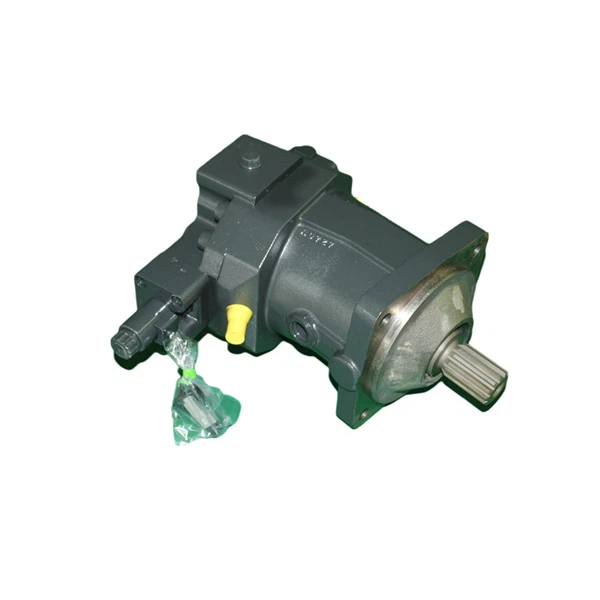
Aluminum alloy hydrauic motor
Aluminum alloy materials commonly used in hydrauic motors include 6061 and 7075. Aluminum alloy material has a small density, light weight, good thermal conductivity and other characteristics, suitable for lightweight industrial equipment. However, the strength of aluminum alloy material is low, easy to oxidize, so it is necessary to carry out surface treatment to improve the surface hardness and corrosion resistance.
Stainless steel hydrauic motor
Stainless steel hydrauic motor has corrosion resistance, rust resistance, beautiful appearance and other characteristics, suitable for some high demand occasions, such as food processing industry. Commonly used stainless steel materials such as 304 and 316. However, stainless steel has lower strength, higher density and heavier weight, and requires higher power to drive.
Application of Hydrauic Motor
Agriculture
In agriculture, hydrauic motors drive equipment such as tractors, harvesters, and irrigation systems. They enable precise control of machinery functions, allowing farmers to optimize productivity and efficiency in crop cultivation and management.
Construction
Hydrauic motors power heavy machinery such as excavators, bulldozers, and cranes in the construction industry. Their robustness and ability to generate high torque make them ideal for handling demanding tasks on construction sites.
Manufacturing
Hydrauic motors are integral to manufacturing processes, powering machinery for metalworking, plastic molding, and assembly operations. Their consistent performance and ability to handle varying loads contribute to streamlined production processes in manufacturing facilities.
Aerospace
Hydrauic motors play a critical role in aircraft systems, powering components such as landing gear, flight control surfaces, and cargo handling mechanisms. Their reliability and durability are essential for ensuring the safe operation of aircraft in demanding aerospace environments.
How Hydrauic Motor Motors Work
Hydrauic motors are essentially mechanical actuators that work to convert fluid power into the mechanical energy needed to power a machine. Fluid power is the driving force behind all hydraulic operations, including the way motors work.
Hydrauic motors use pressurised fluids from the hydraulic pump to generate force such as angular displacement and torque. As the fluid is carried to the hydrauic motor, it pushes on the gears, vanes or pistons of the motor and as a result, turns the motor output shaft. The rotating shaft uses flow and hydraulic pressure to create rotation torque, therefore generating the power and force needed to move the external load. Then the cycle repeats. The speed at which a hydrauic motor operates is dictated by the amount of oil and pressure supplied by the pump.
Considerations When Choosing a Hydrauic Motor
How reliable is the motor design?
Motor designs come in various ways. Some operate with large tolerances and can be used for multi-purposes whereas some motors are discrete in terms of their operating pressure, speeds, temperatures, and knowing this information will assist in system designing and motor selection.
Types of motor control (mechanical or electronic) Controls on a motor can be mechanical or electronic. This depends on what the user wants after considering other factors like power consumption and automation advantages.
Maintenance servicing required
Some motor types can be very efficient and yet require a lot of maintenance. Some, if they are not properly maintained their life cycle is reduced. Axial piston motors, for example, require more maintenance routines as compared to gear motors.
Load requirements
Load requirements are very important when choosing a motor to use because that is the system’s goal. It is advised for the designer of the system to start by noting how big or small the load is. When the load requirements have been identified then one can design other requirements of the system.
Motor type
There are different types of motors, and these motors operate differently depending on the application. Choosing the motor type has a lot to do with understating the ratings and specifications written on the motor by the manufacturer.
Installation and repair
Before one can choose a type of motor to use, they need to gather installation information as well. This is because other motor types require a lot of expertise and are complicated to install. It is essential to talk with professionals about the other costs that are involved before purchasing a hydrauic motor.
Is it a closed or open loop?
A closed-loop in a hydraulic system is also known as a hydrostatic drive and is commonly found in mobile systems and industrial machines such as conveyors. In a closed-loop, the fluid flows directly from the pump to the motor and then returns to the pump without entering a reservoir. The fluid flow determined the speed of the motor. In an open loop, the fluid flows from the motor to the pump through a reservoir. Before choosing the right motor for the system it is essential to understand the loop that will operate in the specific hydraulic system.
Is the displacement fixed or variable?
Motors operate at different displacements, some are fixed, and some can be adjusted. This will only depend on the application. Knowing the application will help on which motor to choose. What is the operating pressure and flow? In hydrauic motors, high operating pressures give a higher force which in turn results in high torque.
Types of bearings and expected life span
Knowing the expected life of a motor and the bearing to be used can help to plan with regard to application and maintenance. There are some complicated machines where it does not make sense to fit a motor type that has a short life span. There are many bearings that can be used for the rotor and shaft. These will depend on the forces and torque produced because bearings are used according to the force that acts on their surface area.
How To Maintance Hydrauic Motors
Test performance
If the performance level of your hydraulic system is slowly decreasing, it could be a result of being used for a more extended period without proper maintenance. Swiftly declining performance can be a precursor for catastrophic hydraulic system failure. Closely monitor your system’s oil and temperature levels, actuator speed, and case drain flow to predict failure in one of the systems. This will help prevent expensive repairs of the failed parts in the future.
Measure the temperature levels
Temperature levels on your hydraulic system can adversely affect your oil’s viscosity. If your oil is above the normal working range of the system’s components, it can reduce its lifespan. For example, high viscosity can result in a temperature drop in the suction lines leading to cavitation. On the other hand, low viscosity reduces the thickness of the film’s consistency between the components, resulting in wear and tear.
Sample your oil
Regularly sample your oil for undesirable contaminants such as water, as it can help prevent the need for costly repairs in the future. Contamination is one of the main reasons why the hydraulic system can leak. As a result of the leakage, the hydraulic pumps can be blocked or accelerate the wear rate. Take your oil for testing from a specific sample point to ensure consistency in measurement. Ideally, you are advised to take a sample from an active return line because testing from a stagnant source like a reservoir drain can result in inaccurate results.
Check your filter indicators
A hydraulic filter indicator monitors the contamination caught by the filter. It displays the contamination level electrically, visually(using a pop-up indicator or a gauge), or both methods. Consider replacing the filter when the indicator reads that it has reached its maximum acceptable contamination holding capacity. If left unmonitored, the filter can start leaking bypass fluid (if your hydraulic system was fitted with a bypass valve), making it vulnerable to more contamination. Check that the gauge style indicator is working correctly, or check the indicator with cold oil for an early warning.
Maintain cleanliness on your equipment
Knowing how to clean hydrauic motor parts is very important if you want yours to last long. Grime and dirt are generally harmless on the exterior of your equipment. However, it puts the internal parts at risk of being contaminated. Contaminants can enter the system when the hydraulic components are disconnected for relocation or maintenance during an oil change or replacing the filter system.
Jining Tongderui Construction Machinery Co., Ltd was established in 2011. Our company is located in Jining City, Shandong PR, China, the place for Komatsu and Shantui manufactory. is a leading supplier for Consruction machinery parts,after 12 years development, Our company service more andmore clients in the world. Help them to got the spare partswith best price and quality, fast delivery. Our company cooperate with the manufactury produce the hydraulic cylinder rod, Could supply for all the model which you need.Our factory owns several mechanical processing production lines, has been approved as OEM parts supplier for Komatsu. Exported to more than 50 Contries. Passed ISO 9001-14001 international quality management system certification.


Certificate

FAQ
As one of the leading hydrauic motor manufacturers and suppliers in China, we warmly welcome you to wholesale discount hydrauic motor made in China here from our factory. All our products are with high quality and low price.
Final Drive PC200 8, 295 9426 Fan Motor, 419-18-41200