

Solenoid Valve
What Is Solenoid Valve
A solenoid valve is an electromechanically operated valve.Solenoid valves differ in the characteristics of the electric current they use, the strength of the magnetic field they generate, the mechanism they use to regulate the fluid, and the type and characteristics of fluid they control. The mechanism varies from linear action, plunger-type actuators to pivoted-armature actuators and rocker actuators. The valve can use a two-port design to regulate a flow or use a three or more port design to switch flows between ports. Multiple solenoid valves can be placed together on a manifold.
Advantages of Solenoid Valve
The operation is simple, conveniently connected to the computer, and the price is low
The solenoid valve has simple structure and low price, and it is easy to install and maintain compared to other types of actuators such as regulating valves. What's more, the auto-control system formed by solenoid valve is much simpler and the price is much lower. Since the solenoid valve is controlled by the switching signal, it is very convenient to connect with the industrial computer.
Fast response time, small power consumption, and light weight
The solenoid valve response time can be as short as a few milliseconds, even a pilot operated solenoid valve can be responded in tens of milliseconds. Because of the self-contained loop, it is more sensitive than other automatic control valves. The well-designed solenoid valve has low power consumption and is an energy-saving product. It can also automatically maintain the valve position by doing trigger action, and does not consume electricity at all. The solenoid valve has a small size, which saves space, and is light and beautiful.
The function is simple and easy to use
Solenoid valves usually only have two states of switching, on and off, and it is easy to install and use in the pratical applications. However, the valve core can only be in two limit positions and can not be continuously adjusted, so the accuracy of adjustment is also limited. Solenoid valves have high requirements for the cleanliness of the medium. Granular medium can not be applied, thus the impurities must be filtered out. In addition, viscous media is not suitable, and the viscosity range of the medium for a particular product is relatively narrow.
Various models, and wide applications
The advantages of solenoid valves are still very outstanding. So it is designed into all kinds of products to meet different needs. The solenoid valves are widely used in wide range of applications.
-
 Accumulator 21T-64-33841 21T-64-33840 For Komatsu Origina...Accumulator 21T-64-33841 21T-64-33840 for komatsu original PC2000-8Add to Inquiry
 -
 Komatsu PC400-7 Solenoid Valve 208-60-71340Construction Machinery Genuine Komatsu Excavator Parts Solenoid Valve 208-60-71340 for PC400-7 PC400LC-7Add to Inquiry
 -
 HD785-7 Solenoid Valve 42C-60-18230Construction Machinery Genuine Komatsu Dump Truck Parts Solenoid Valve 42C-60-18230,for HD325-7, HD405-7, HD465-7, HD605-7, HD785-7, WA800-3, WA900-3Add to Inquiry
 -
 Solenoid Valve 42C-60-18230 Komatsu HD785Komatsu Solenoid Valve 42C-60-18230 for HD785-7 Dump Trucks, Komatsu Genuine Parts in stockAdd to Inquiry
 -
 Komatsu Solenoid Valve 17A-15-17271Construction Machinery Genuine Komatsu Wheel Loader Spare Parts Solenoid Valve 17A-15-17271 714-10-16951,for D155AX, GD825A, LW100, WA100, WA150, WA180, WA180PT, WA200, WA250, WA250L, WA300, WA320,Add to Inquiry
 -
 WA320-8 Solenoid Valve 419-18-51310Construction Machinery Genuine Komatsu Wheel Loader Spare Parts Solenoid Valve 419-18-51310,for WA270-7,WA270-8,WA320-7,WA320-8Add to Inquiry
 -
 Komatsu PC1250-11 Solenoid Valve 2A3-60-11321Construction Machinery Genuine Komatsu Excavator Spare Parts Solenoid Valve Assembly 207-60-71320/2A3-60-11321,for PC1250-11,PC1250LC-11,PC1250-11EO,PC500LC-10R,PC500LC-10MOAdd to Inquiry
 -
 PC2000-8 Valve Ass'y 209-60-77230Construction Machinery Genuine Komatsu Excavator Spare Parts Valve Ass'y 209-60-77230,for PC2000-8, PC600-8, PC650-8, PC700-8, PC750-8, PC750SE-8, PC800-8, PC800SE-8, PC850-8, PC850SE-8Add to Inquiry
 -
Komatsu Solenoid Valve 209-60-77230 PC650 Excavator PartsKomatsu Solenoid Valve for PC2000-8 PC600-8 PC650-8 PC700-8 PC800-8 PC850-8, Part number 209-60-77230Add to Inquiry
-
 SOLENOID VALVE 209-60-77230 For Excavator Pc2000-8SOLENOID VALVE 209-60-77230 for Excavator pc2000-8Add to Inquiry
 -
 PC600-8EO Solenoid Valve 21M-60-31210Komatsu Genuine Excavator Parts Solenoid Valve Ass'y 21M-60-31210,suitable for PC600-8EO PC600LC-8EO PC600-8R1 PC600LC-8R1 PC650LC-8EO PC700LC-8EO modelsAdd to Inquiry
 -
 Komatsu Solenoid Valve 714-12-25220Komatsu WA380-6 WA470-6 WA480-6 Genuine Wheel Loader Parts Solenoid Valve 714-12-25220Add to Inquiry
-
 Origina 561-40-61330 Bushing For HD985 HD785
 -
 Genuine Product 20Y-979-6191 Sensor For BP500-7 PC200 PC1...
 -
 New Bushing 6210-21-1790 For S6D140E Parts
 -
 VALVE PARTS 714-10-16951 FOR WA200
 -
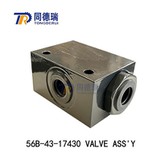 Genuine Product 56B-43-17430 Valve For HD450-7 HD325-7 HD...
 -
 New Cap 581-96-14630 For Excavator
 -
 6754-11- 3011 Fuel Injector Assembly
 -
 Water Separator 600-311-7610 600-311-7611 600-311-7612 OE...
 -
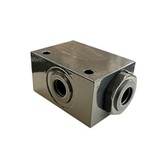 HD605 HD785 Valve Assy 56B-43-17430 OEM Japan in Stock Wi...
 -
 HEATER UNIT 205-977-7110 For Excavator PC200-6S
 -
 HD785 Valve Assembly 561-88-86270 OEM Japan in Stock With...
 -
 HD785 Sensor 7861-92-1620 OEM Japan in Stock
- Tel: +8613455586650
- Email: admin@tdrzl.com
- Add: No.8 Shanbo Road, High tech Zone, Jining City, Shandong Province.
Our factory
Our company is located in Jining City, Shandong PR, China, the place for Komatsu and Shantui manufactory. is a leading supplier for Consruction machinery parts. Our company cooperate with the manufactury produce the hydraulic cylinder rod, Could supply for all the model which you need.Our factory owns several mechanical processing production lines, has been approved as OEM parts supplier for Komatsu.
Our product
Our company supply spare parts for excavator, wheel loader, bulldozer and other construction machinery parts. Our parts main used for excavator, wheel loader and bulldozer.
Production market
Our parts main sold South America, Southeast Asia and Saudi Arabia. Exported to more than 50 Contries.
Our service
Could supply you the complete parts with cheaper price. We try and respond to all concerns within 24 hours and our teams are always at your disposal in case of any emergencies.
Solenoid Valve Types
Normally closed solenoid valve
For a normally closed (NC) solenoid valve, the valve is closed when de-energized, which prevents the media from flowing through it. When current is sent to the coil, it creates an electromagnetic field that forces the plunger upwards overcoming the spring force. This unseats the seal and opens the orifice allowing the media the flow through the valve. It shows the operating principle of a normally closed solenoid valve in the de-energized and energized states. A normally closed solenoid valve is ideal for applications that require the valve to be closed for long periods of time as this is then more energy efficient. They can also be used for safety reasons, if the application requires the valve to be closed with no power for safety reasons.
Normally open solenoid valve
For a normally open (NO) solenoid valve, the valve is open when de-energized, which allows the media to flow through it. When current is sent to the coil, it creates an electromagnetic field that forces the plunger downwards overcoming the spring force. The seal sits in the orifice and closes it, which prevents media from flowing through the valve. Figure 4 shows the operating principle of a normally open solenoid valve in the de-energized and energized states. A normally open solenoid valve is ideal for applications that require the valve to be open for long periods of time as this is then more energy efficient. They can also be used for safety reasons, if the application requires the valve to be open with no power for safety reasons (e.g., to prevent overpressure).
Bi-stable solenoid valve
A bi-stable or latching solenoid valve can be switched by a momentary power supply. When de-energized, the valve stays in the position it switched to. Therefore, it is not normally open or normally closed as it stays in the current position when no power is applied. They accomplish this by using permanent magnets, rather than a spring. This gives the benefit of reduced power consumption.
Solenoid valves are used in a near infinite number of applications – from automatic sprinkler systems and inkjet printing to medical devices and satellite propulsion. Generally, their associated functions can be divided into four categories: Open and close flow, control flow direction, control flow volume, and regulate flow rate.
Open and close flow
The most common function for a solenoid valve is to open and close a flow path. For example, a solenoid valve in a dishwasher will be in the closed position when the dishwasher is off in order to conserve water. When the dishwasher is turned on, the valve will open for the period of operation during which water needs to flow onto the kitchenware.
Control flow direction
A solenoid valve may also be used to control the flow path or direction that a fluid travels. When used for this purpose, the solenoid valve will typically have multiple inlet or outlet ports. Energizing the coil helps to change which ports are open so that the fluid travels through an alternate channel. For example, the valve can be used to mix two fluids together in a specific ratio. In this scenario, the valve will have two inlet ports, or one for each fluid. The outlet port will be connected to the mixing chamber. When the valve is de-energized, fluid “a” will travel into the mixing chamber. When the valve is energized, fluid “b” will travel into the chamber. The ratio of each fluid can be altered by varying the length of time that the valve is energized.
Control flow volume
When precise flow volume is required, a solenoid valve may be operated to open and close during defined periods of time to allow a specified volume of fluid to flow through the valve. In printers, for example, a solenoid valve can be used to dispense droplets of ink. In these systems, the inlet pressure must remain constant to ensure that the flow volume over a period of time is consistent. When a high degree of accuracy is needed, other factors such as fluid properties and environmental conditions can also impact flow rate.
Regulate flow rate
A solenoid valve can function to control the flow rate of a liquid. When used for this purpose, the valve may be able to operate quickly enough that varying the frequency at which the valve is energized also varies flow rate through the valve body. This technique is commonly referred to as pulse width modulation (pwm). Solenoid valves can also be designed to operate in a non-binary position in which the valve is neither fully open nor fully closed. These valves are commonly called proportional valves. By adjusting the valve components, overall restriction of the valve changes and meters flow. For instance, oxygen concentrators use solenoid valves to vary the flow rate of oxygen to a patient based on an individual’s need.
Key Components of Solenoid Valves
Solenoid valves are composed of three key components, namely the coil, plunger, and body. The coil serves as an electromagnet that converts electrical energy into magnetic force, while the plunger, when magnetized, controls the flow of air, gas, water, or steam. The body encapsulates these parts, offering protection and stability. These components work seamlessly together to regulate the flow of fluids or gases in a variety of applications.
The coil
The power source in a solenoid valve, the coil generates the essential magnetic field for valve operation. Understanding its characteristics, such as voltage and power consumption, is crucial for proper valve selection. The design and material composition of the coil impact the responsiveness and efficiency of solenoid valves, highlighting its significance in overall valve performance. Proper maintenance of the coil is essential for ensuring reliable valve operation.
The plunger
The plunger is the moving part responsible for regulating fluid flow in a solenoid valve. Assessing its durability and performance requires an understanding of its design and material composition. Precision and responsiveness of solenoid valves rely heavily on the plunger's design and functionality. Achieving accurate fluid control depends on the critical alignment and movement of the plunger. The dynamics of the plunger's operation directly impact the overall effectiveness of solenoid valves.
The body
The structural support and fluid containment of a solenoid valve are provided by its body, housing all internal components. Assessing the compatibility with different fluids and environments involves understanding the construction and material properties of the valve body. The durability and reliability of solenoid valves are directly influenced by the design and integrity of the body. Preventing leaks and ensuring consistent performance requires proper maintenance and inspection of the valve body. Design considerations for the body include port configuration, mounting options, and environmental sealing.

How Does a Solenoid Valve Work?
Solenoid valves are essentially flow control units with the ability to restrict or enable flow. This depends on the type of valve in question and whether or not they are in a currently activated (energised) state at any given time. But how does a solenoid valve work in practice?
In a standard spool or poppet-type valve, the solenoid valve connection is direct to a plunger, pivoted armature, or another similar device, which for most models will be spring-mounted in some configuration. This plunger is located inside a hollow tube, often called the solenoid core.
When electrically energised, the wire coil wound around the outside of this core creates a magnetic field inside the tube. In turn, this influences the motion of the plunger. This then pushes or pulls the valve in a particular direction, opening or closing the flow system. The precise way in which the solenoid valve functions - either to open or close when automatically activated - will depend on the specific type and configuration of the valve and solenoid controller chosen, and thus its normal operating state.
Different Solenoid Valve Circuit Functions
Two-way solenoid valves
This type of solenoid valve features one upstream and one downstream port and is used to either block or permit fluid flow. It can be configured as normally open or normally closed, with the "normal" state referring to the de-energized position. A normally open valve remains open when de-energized and closes when energized, while a normally closed valve remains closed when de-energized and opens when energized.
Three-way solenoid valves
Three-way solenoid valves feature three ports: An inlet (pressure port), an exhaust port, and an outlet (actuator port). They are used to alternately apply and exhaust pressure from an actuator or downstream equipment. These valves can be configured as normally open or normally closed, with an additional universal function. In a normally open three-way valve, when de-energized, fluid flows from the inlet port to the outlet port while the exhaust port remains closed. When energized, the inlet port is closed and the outlet port connects to the exhaust port. For normally closed valves, the configuration is reversed. The universal function allows for flexible control of flow direction between the ports.
Four-way solenoid valves
Four-way solenoid valves have four ports: An inlet (pressure port), two outlet or actuator ports, and an exhaust port, with some designs featuring two exhaust ports. These valves do not operate in a normally open or closed mode. Instead, they direct flow either to the first outlet port or the second, depending on the valve's position. Note that two-way, three-way, and four-way valves can be either direct or indirect acting.
Steps for Maintenance of Solenoid Valves
Disconnect power
Before performing any maintenance on the solenoid valve, disconnect the power and depressurize the system. This will prevent any accidental valve activation that may cause harm during maintenance.
Inspect the coil
Check if the solenoid valve has any cracks or burn marks. If the coil is not installed on the valve stem, do not energize it to avoid burning the coil with high current.
Clean internal components
Use a wrench to remove the valve stem and disassemble internal components of the solenoid valve such as the plunger, seals, spring, and o-rings. Use a clean cloth to wipe off any dust or debris on the valve body and internal components. Clean these components in running water to remove any accumulated dirt.
Inspect internal components
Check if the sealing elements show signs of swelling, cracking, or general deterioration. Inspect if the spring coils are damaged. Check if there are deposits, swelling, or rust inside the valve, as these can affect the movement of internal components or cause leaks. Look for signs of scratches near the orifice. Additionally, inspect the top of the plunger and the inside of the valve stem for signs of deterioration. If the solenoid valve has more complex components such as diaphragms, pistons, or valve cores, make sure to follow the product instructions.
Repair or replacement
After checking for possible malfunctions in the solenoid valve, determine whether to repair or replace several components or the entire valve. If the part to be replaced is small, such as an o-ring, it is best to only replace the component and reassemble the valve. Generally, replacing the entire valve unit is more cost-effective in basic applications. If the valve body has welded fittings or disassembling it poses potential hazards, it is best to periodically rebuild the disassembled valve, replace any worn or damaged parts, and reassemble the valve instead of choosing complete replacement.
Reassembling the solenoid valve
After replacing necessary parts and clearing any deposits, follow the specific application instructions to reconnect the coil and reinstall the solenoid valve. Before turning on the power, please ensure that the parts are properly installed.
Testing valve
After reassembling the solenoid valve, please ensure that it is functioning properly. Apply power to the valve and observe its operation. Check for any leaks, abnormal noises, or other signs of malfunction.
Maintenance record
Keep a record of the maintenance performed on the valve, including the date, type of maintenance, and any observations or notes. This information will help track the performance of the valve over time and plan for future maintenance.
Jining Tongderui Construction Machinery Co., Ltd was established in 2011. Our company is located in Jining City, Shandong PR, China, the place for Komatsu and Shantui manufactory. is a leading supplier for Consruction machinery parts,after 12 years development, Our company service more andmore clients in the world. Help them to got the spare partswith best price and quality, fast delivery. Our company cooperate with the manufactury produce the hydraulic cylinder rod, Could supply for all the model which you need.Our factory owns several mechanical processing production lines, has been approved as OEM parts supplier for Komatsu. Exported to more than 50 Contries. Passed ISO 9001-14001 international quality management system certification.


Certificate

FAQ
As one of the leading solenoid valve manufacturers and suppliers in China, we warmly welcome you to wholesale discount solenoid valve made in China here from our factory. All our products are with high quality and low price.
Solenoid Valve PC200 8, Solenoid Valve, 20Y-60-31212