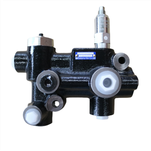


This coupling sits between the power take-off side and the driven component, so condition changes are usually picked up during operation rather than from a visual check alone. Watch for:
A knocking or clunking noise when the machine starts, accelerates, or changes direction of load.
Vibration felt through the linkage or hydraulic system under load, stronger at certain engine speeds.
Slip or lag between input and output, with driven functions responding slower than expected.
Wear marks, fretting, or play on splines and mounting faces after inspection.
Oil seepage around the housing where seals or gaskets have hardened.
Cracks, deformation, or uneven wear on the elastic element / rubber damping section if fitted.
If noise appears together with vibration, inspect the coupling first before assuming a pump or motor fault.
Clean splines, mounting faces, and bolt holes before fitting. Remove old sealant, rust, and dirt; any foreign material left under the coupling will create runout and load imbalance.
Align the input and output shafts carefully. Misalignment is the most common reason a coupling develops early wear, vibration, or seal damage.
Check that splines slide in smoothly without forcing. Binding at installation usually points to a wrong part, misaligned shaft, or damaged spline.
Install fasteners to the specified torque in a crisscross sequence. Do not over-tighten; distortion of the housing or flange will show up as vibration later.
Replace seals and gaskets that are disturbed during removal, and refit any retaining clips or locking devices to their original position.
After fitting, run the machine at low speed first. Listen for noise and feel for vibration before returning to normal working load.


Do not wash away or skip the prescribed lubrication on splined and load-bearing surfaces. Dry running accelerates wear and causes fretting corrosion.
Avoid abrupt load engagement and repeated full-load starts. Shock load shortens the life of both the coupling and the driven pump or motor.
Do not use a coupling with visible cracks, deformed flanges, or hardened elastic elements in service. Reuse of a damaged part can damage the shaft or housing on the driven side.
Keep the area around the housing free of mud, dust, and fine debris; contaminants accelerate seal wear and can enter the connection through damaged seals.
Check bolt torque and alignment at scheduled service intervals, especially after heavy work or a period of standby.
Do not mix bolts, spacers, or dampers from different assemblies unless dimensions and part numbers match.
This component is fitted on a large excavator working in heavy earthmoving, quarrying, and demolition-type duties. Machine conditions have a direct effect on coupling life:
In quarry and rock work, shock load and vibration are higher; inspect the coupling and its fasteners more often.
In dusty or wet terrain, pay attention to seal condition and clean the housing regularly.
For machines that stand idle for long periods, check for rust, stiff splines, and trapped moisture before putting the machine back to work.
If the machine regularly carries heavy breakers or works at continuous high load, shorten inspection intervals rather than relying on a fixed hour-based schedule alone.


One-Stop Excavator Parts Supplier In China
Send your inquiry about excavator spare parts to us and get reliable replacement parts for your heavy equipment. We supply genuine equivalent parts for Komatsu, Caterpillar and other machinery brands. Fast delivery, strict quality inspection and competitive pricing help your equipment maintenance business stay stable.